Control and Creativity
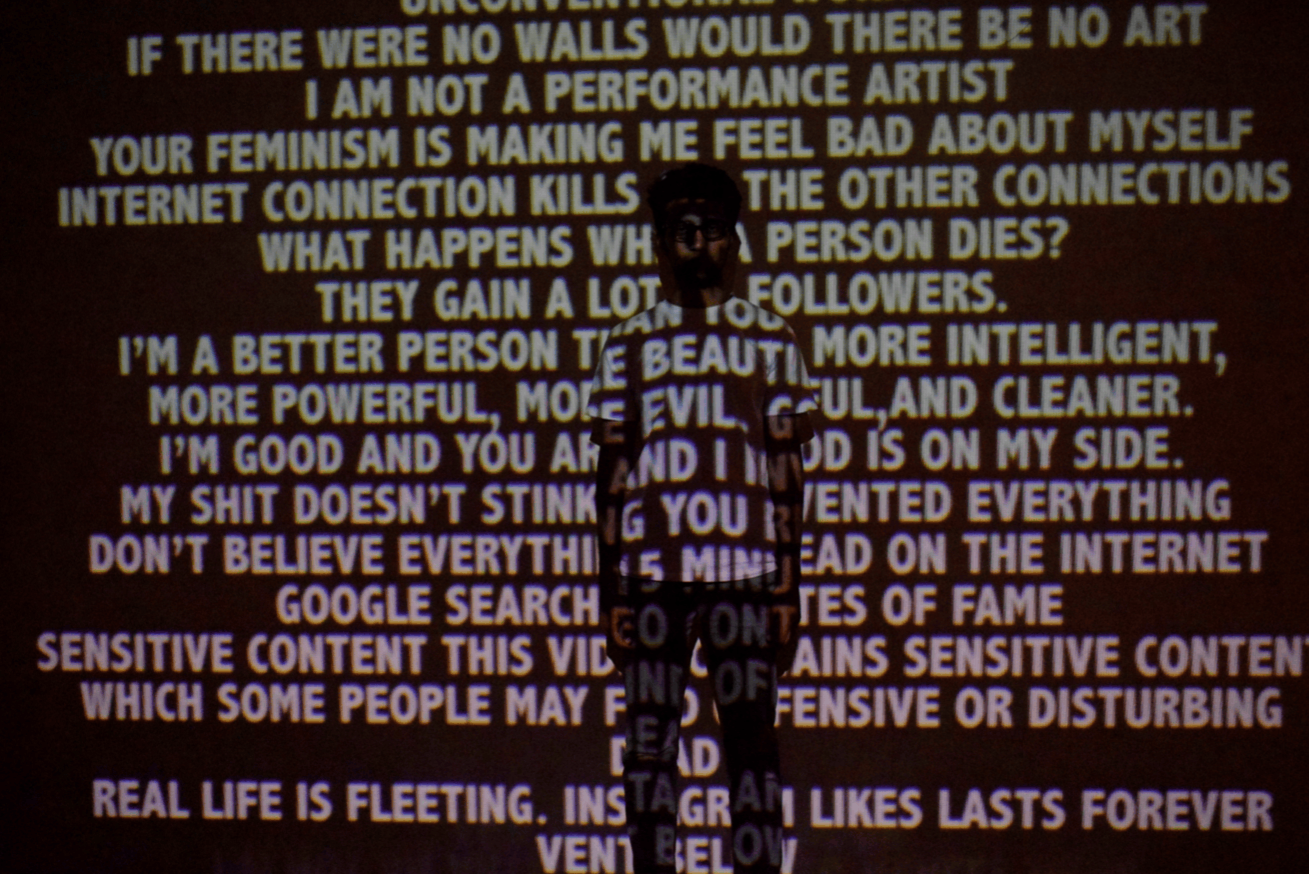
Mariam’s work is a critique of the society, in a way that it highlights the irony with established practices and norms. She sees the mundane with an introspective eye. Through her art, Mariam questions the beliefs and norms, highlighting the irony of opposing symbols in the societal system. In doing all this, she recontextualizes how we, the viewers and the artists alike, see and make sense of the world around us. Even the everyday advertisements that both set the trends and follow the norms in the society are questioned through her art.
In Fulfilled Destiny, the approach is an existential critique of the human need to reach somewhere and achieve perfection. This desire stems not from the fact that there is a perfect end, but it is a self-created and self-imposed race created and imposed by man upon himself. In other artworks of her, looking beyond self towards the universe and that which is outside man is considered emancipatory and assists in human transcendence.
For Mariam, art, and even life in itself, is a journey of self-exploration. It takes man from within himself back to himself. When we interact with art and literature, the brain areas connected to introspection and empathy get activated. This develops both intra- and inter-personal connections. In the outer experience, the canvas is a collection of colors but through the human eye, the human soul and psyche undergoes a transformative journey as it interacts with the works of art. This is true for the artist as well; the creator of the art is transformed after each piece that is created. Each produced work, serves as a piece of puzzle slowly completing and realigning the personality of the artists.
Commercialization of art, however, has put the artist on show. He becomes akin to the Hunger Artist, who is there for display, and his work is undermined by the act of putting a price on it. But, at the same time, the commercial aspect pushes artists to sell an idea, which accelerates the process of production of art. The phenomenon serves art production but slows down the process of self-discovery. In the contemporary world, existing for display is no longer peculiar to artists but true of all humans. Mariam has used the mirror to highlight how we all are presenting ourselves, either by taking selfies or through the hustle culture that removes the essence of being. She also subtly asks the question of why, at all, are we presenting ourselves and assigning tags and labels for ourselves. In a world where consuming is the practice, humans have turned themselves into commodities as well. Through her Deconstructed Fridge Box, Mariam breaks the boundary walls for artistic expression and creation and also protests hyper-consumerism in the society. The art piece tries to convey that mundane is beautiful if looked with a changed outlook.
Her artwork tries to make the viewer pause and rethink their preconceived notions and call them to question the concepts that are considered to be correct. In the digital age, the man who was born in nature and whose mind and body are in sync with nature, the society has dysregulated itself and dissociated from the natural process to an artificially curated world. The artist asks how effective has it been and has man progressed or lost by only existing in the digital realm.
The main goal of Mariam’s art is to say subtly, what Sohrab Spehri has said explicitly, that the eyes must be washed and a new perspective must be employed.
Written by Fatima Kizilbash
Fatima holds a BS Psychology from Alzahra University Tehran and MA English from University of Balochistan. She writes on postmodernism, gender, climate, psychology and trauma. Fatima is currently expanding into fiction storytelling.
Image: Untitled, Mariam Waheed, video projection, duration: 38 seconds, all copyrights are retained by the artist, 2026.