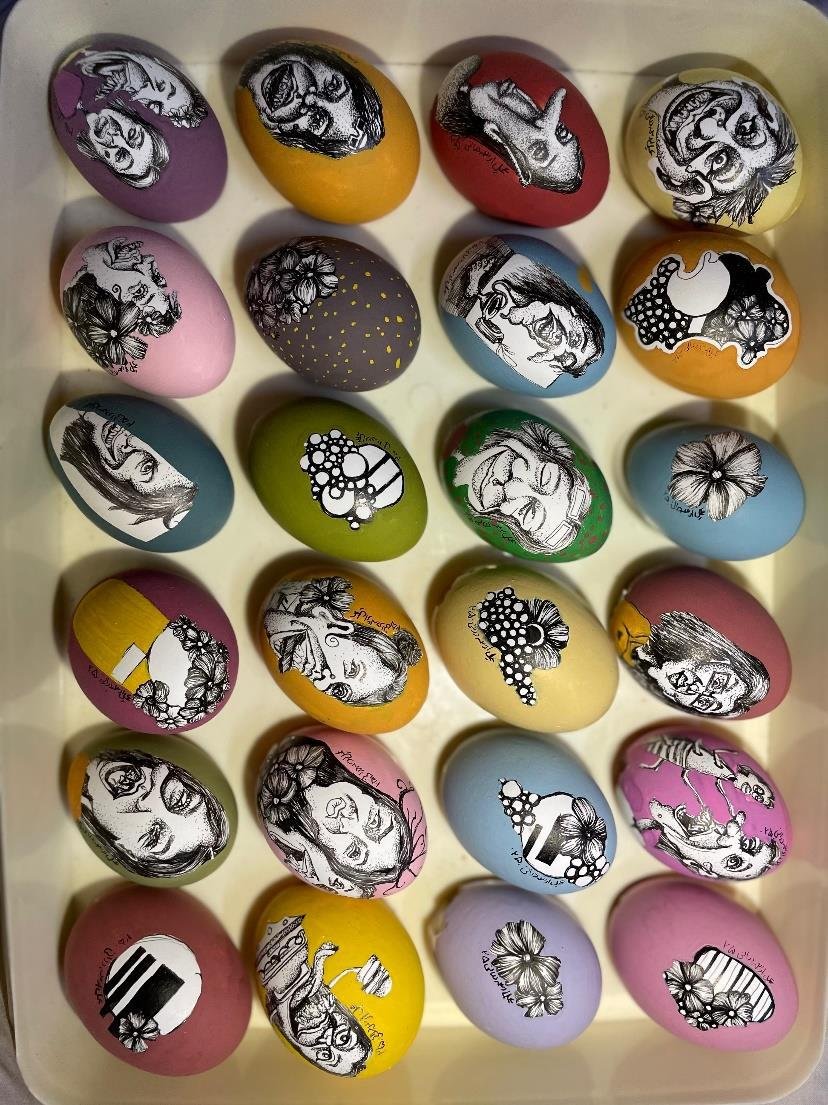
Irsa uses small symbols to signify magnanimous emotions
Irsa started her artistic venture from Rawalpindi Women University. She is unafraid to display her emotions and work through personal experiences with the stroke of a brush. The subjects used in her vision – caricatures, flowers and self portraits – are all a part of her plan. The immersion of the self in the paintings is a showcase of empathy and compassion for all those who will feel certain emotions erupt; feelings and memories linger; the message is clear: we are less alone in the world.
Irsa is not merely a connoisseur of painting, but an observer of the very essence of human nature, the profound and undulating aspect of homo sapiens: the association of self and emotions with color. Colors are a window of emotional ventilation for an artist to connect with their audience and with themselves. In her works, Irsa uses colors to communicate with us – about things unsaid, unidentified and unseen. In the international lingo, the color yellow is far and widely associated with joy, happiness and serendipity, but Irsa utilizes it to showcase forced joy – a local and culturally appropriate interpretation is that we have the burden of saving/keeping a face upon us. Thus, the joy of being happy is substituted with the existential burden of appearing happy.
The pink hue is of the most important essence in Irsa’s work. There are two very extreme ends to it; one might even say that the artist is guiding our hand through emotional fluctuations and the overwhelming intensity of the said emotions. It’s with the intention of making the subject matter stand out- kind of like accessing the mind’s capability of discerning figure and ground of the experience. The figure is us and the painting, and the background is our environment/people/stereotypes and feelings of being heard or seen. All else collapses and emerges simultaneously.
The trick to her footing as an artist is being well-versed in the local artistry and representing her environment through caricatures and small creatures on the canvas. The unusual nature of the selection of symbols is intentional. One even may ascertain that the very nature of their placing in curious positions on the canvas is for the attentional purpose, because the sharp edges of the knives, the pointy tips of the caricatures and the laughing insects are meant to grab your attention-sit you down and ask you a very important question: Have you ever looked at how mundanity of life is actually the beauty of it?
Written by Tehreem Fatima
Tehreem is pursuing ADCP at Centre of Clinical Psychology, Punjab University. She developed an interest in artistic practices from an early age. She also makes custom Eid, birthday, and Mother’s Day cards for her family.
Image: Untitled, Irsa Durrani, gouache and pointers on egg shells, all copyrights are retained by the artist, 2026.