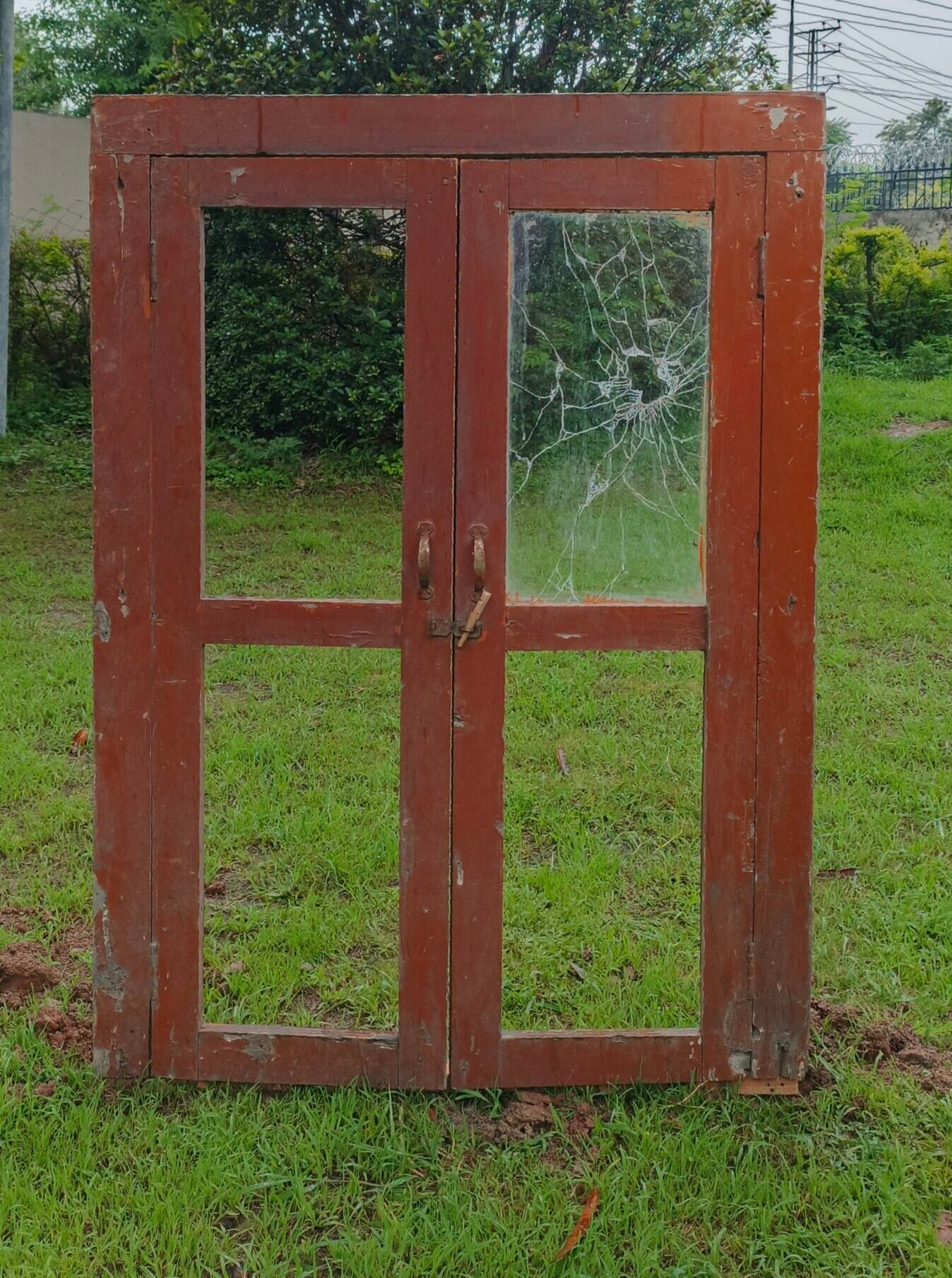
Philocalist artist Pakiza bridges the raw outer world and the emotional within
She focuses on basic ingredients in their crude form rather than the distilled product because she believes in the concentrated effort required to nurture a seedling into standing timber. For her, art not only plays an aesthetic role but also whispers of the past. Every work is a tale of the past. It is a combination of time, memory and thresholds. Some works represent memories as an albatross, while others show them as a living element within humans. Both sides of the coin (the past and its lingering presence) chant their spell to convey the heart of memory. For her, humans can be as fragile as flowers and as tough as rocks, depending on how they tackle the psychological wounds of the past. And when recalling the past becomes a part of a person, it can be harsh on the soul as physical burdens are never (ever) welcomed. We are what happens to us. Her creative practice centers on the raw because for her, the raw is the real aesthetic.
She uses the idea of caudal autotomy as a defensive mechanism against trauma. Doors are used as metaphors for shields, leaving and welcoming, hushed waiting, the very concepts of availability and uselessness. She has personified them. They are functional metaphors recording existence. She wants the viewer to embrace the unfiltered physical decay and flaws of their surroundings. She wants them to be proactive in taking responsibility for both the beauty and the beast. The beauty here, she finds in unadorned objects. Her thoughts are always with the often ignored foundation of these objects. Her eye catches the deteriorated yet firmly rooted material and places it within the contemporary context, reframing it using rich effects. The work demonstrates how concepts, when merged with time honored artefacts, can represent our seemingly mundane daily lives on a broader level, in a grand manner. Every door has the touch of tradition.
There are three distinct elements: color, material manipulation and textural depth. The smooth fabric shifts into timeworn cracked wood and glass knackered but still holding the frame gives tangible form to the abstract phenomena such as resilience, emotional weight and temporal decay. Her intermixing of paradoxes like wire roses, multilingual inscriptions and scribbled delivery numbers creates a multisensory experience. The inspiration from Ali Minai’s poetry encourages us to see doors beyond their conventional duty to mark and secure new beginnings.
Every door shows her love for memories. Pakiza treats doors as scribes. They are keeping a record of meetings and greetings, interactions between government servants and taxpayers, daily deliveries and painful good byes. They hear the silent expectations. They fear abandonment and becoming deadwood. They carry the psychological states of generations of people across ages. These are their autobiographies. They serve as a reminder that weathered materials often carry our deepest histories, telling us to slow down, cradle the raw beauty and find our way back to the elemental.
Written by Hafiza Ayesha Mumtaz Alvi
Ayesha has recently completed her Bachelors of Studies in English from the National University Of Modern Languages. She is currently a faculty member at Adabistan-e-Soophia in Lahore. She likes to write fiction that pulls her reader away from reality and into worlds of fantasy.
Pakiza Hassan is a visual artist and art educator. She is a young graduate from Rawalpindi Women University. She enjoys working with oil paintings, installations and textures. She is inspired by the complexities of our flaws and believes art to be a primal tool for human communication.
Image: مایا, Pakisza Hassan, installation, all copyrights are retained by the artist, 2026.